

Judicial Review Applications
The firm provides legal representation for applicants seeking Judicial Review in the Federal Court after receiving an immigration decision that may have been unreasonable or procedurally unfair. Judicial Review is a formal process that examines whether the decision-maker acted lawfully and followed fair administrative procedures.
Judicial Review does not assess whether the Court agrees with the outcome. It examines whether the decision meets the legal standards of reasonableness and fairness under the Immigration and Refugee Protection Act and the Federal Courts Act.
Overview of Judicial Review
Judicial Review is available when an officer or tribunal has issued a decision that:
- misapplied legal requirements
- overlooked or misinterpreted important evidence
- relied on irrelevant or unsupported assumptions
- provided inadequate or unclear reasoning
- denied the applicant a fair opportunity to respond
- exceeded the decision-maker’s legal authority
The Federal Court may set aside a decision that does not meet the required standards and return the matter for redetermination by a different officer.
Judicial Review is available only after any statutory appeal rights have been exhausted.
Who This Service Is For
This service is suitable for applicants who received:
- refusals of temporary or permanent residence applications that were complete and properly submitted
- refusals of work or study permits issued after full documentation was provided
- negative decisions on sponsorships or humanitarian and compassionate applications
- negative decisions involving admissibility or enforcement matters
- determinations made by the Immigration and Refugee Board
- decisions that appear inconsistent, inadequately reasoned, or procedurally unfair
- refusals that do not address the evidence submitted or apply the correct legal requirements
Filing Deadlines
Judicial Review must be filed within the statutory deadlines under section 72(2) of the IRPA:
- 15 days for decisions made inside Canada
- 60 days for decisions made outside Canada
These timelines are strict. Extensions require a separate request and are granted only in limited circumstances.
Legal Representation Provided
Eligibility and Strategy
The firm reviews the decision and supporting documents to determine whether Judicial Review is appropriate, including:
- whether Judicial Review is the correct remedy based on available appeal rights
- whether the decision-maker applied the correct legal test
- whether the reasoning was transparent, intelligible and justified
- whether relevant evidence was overlooked or misinterpreted
- whether procedural fairness was provided
- whether any statutory or regulatory requirements were not met
Preparation of the Federal Court Application
Representation includes:
- drafting the application for leave
- preparing supporting affidavit evidence and exhibits
- reviewing the Certified Tribunal Record
- preparing written arguments demonstrating why the decision is unreasonable or procedurally unfair
- communicating with the Department of Justice
- preparing oral submissions for the hearing, if leave is granted
The process follows the Federal Court’s two-stage structure: leave, followed by a potential hearing.
Complex Situations
Judicial Review may be appropriate for:
- cases where the record does not support the refusals given
- refusals based on credibility concerns without supporting analysis
- decisions that rely on assumptions rather than evidence
- refusals where documents were not properly assessed
- refusals involving discretionary decisions without adequate justification
- determinations issued before the applicant had an opportunity to respond
When Judicial Review May Not Be Suitable
Judicial Review may not be appropriate where:
- the refusal is correct in law and properly supported
- the applicant has an available appeal that must be used first
- the decision is interlocutory and does not finally determine the matter
- the issue relates to processing delays rather than a final decision
- required documentation was not submitted before the refusal
The firm assesses these factors during the initial review.
Latest Updates
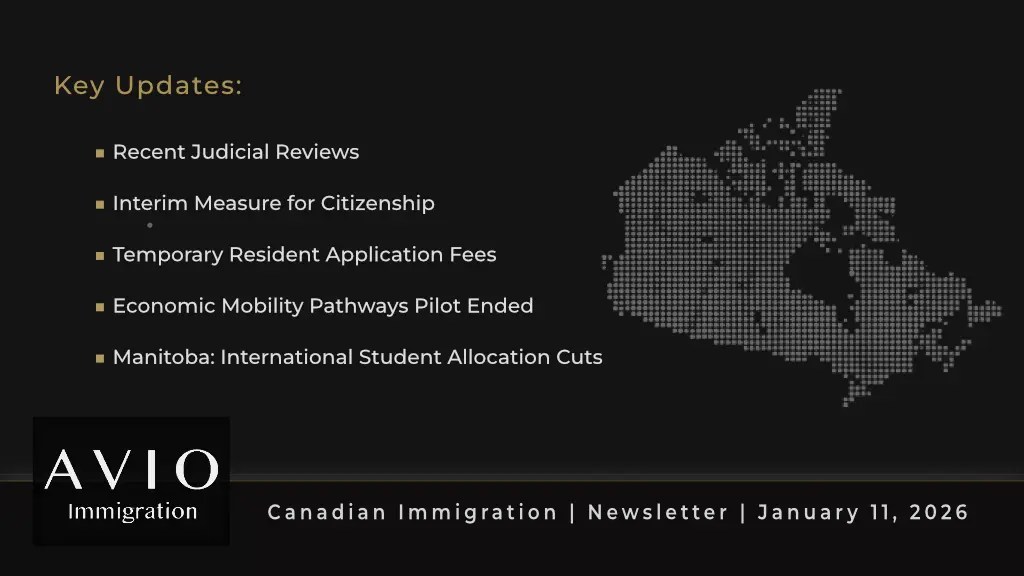
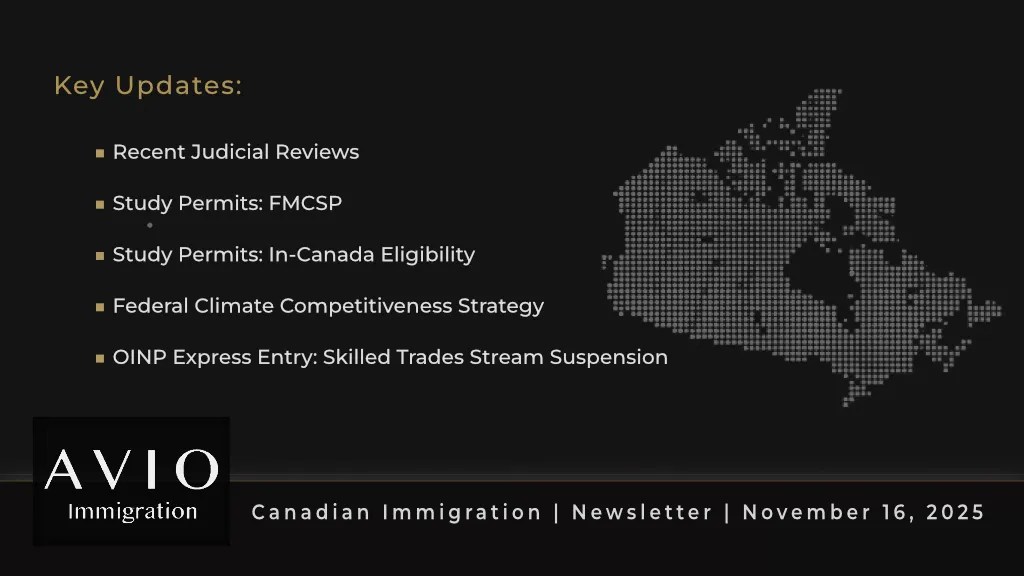
A curated feed of recent Federal Court developments applicable to immigration refusals, procedural fairness, and administrative decision-making standards.














 AVIO Immigration